
People
1. Group Leaders
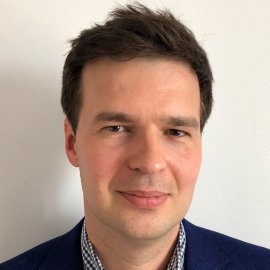
dr hab. Wiktor Lewandowski
Professor of Materials Chemistry at the University of Warsaw and Head of NanoOrgMat, an independent research group established in 2016. His work focuses on programmable chirality: how handedness emerges, propagates across molecular, nanoscale and mesoscale organisation, and becomes an optical function in hybrid materials. His research has been recognised with the 2024 National Science Centre Award in physical sciences and engineering, the Prof. Stefan Pieńkowski Award and the Świętosławski Award of the Polish Chemical
Society. He is an inventor or co-inventor of nine patents and patent applications, including granted European patent EP 4 513 241 B1.
Selected international collaborations,
CIC biomaGUNE · Karlsruhe Institute of Technology · EMAT Antwerp · TU Dortmund · Institute for Molecular Science, Okazaki · University of Vigo · ICMAB-CSIC · University of Illinois Chicago · MIT · University of Maribor
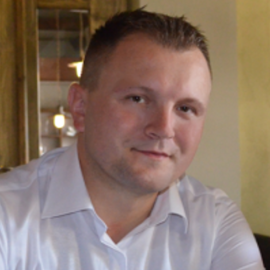
dr hab. Michał Wójcik
I completed my MSc studies in Chemistry at the University of Warsaw in 2007 and obtained my PhD in Chemistry with distinction in 2011 under the supervision of Prof. J. Mieczkowski. Before beginning my doctoral research, I held a research fellowship from the European Science Foundation at Martin Luther University Halle-Wittenberg (Germany). In the following years, I carried out postdoctoral research at the University of Colorado Boulder (USA) and at UPMC – Sorbonne Universités, Paris (France), as a recipient of the French Government Fellowship. At the Faculty of chemistry, University of Warsaw, I lead a team working on functional and stimuli-responsive nanomaterials. My scientific interests lie at the intersection of organic chemistry, materials science, and biotechnology. Together with my collaborators, I design hybrid nanostructures based on noble metal and magnetic nanoparticles, liquid crystals, and bioactive molecules. We study their self-assembly, chiral and plasmonic properties, and potential applications in photonics, catalysis, and biomedicine. Our research also includes the development and preclinical evaluation of nanoparticle-based drug delivery systems. The overarching goal of our work is to understand and control the relationship between structure and function at the nanoscale, bridging fundamental
nanoscience with practical technologies.
FULL BIOGRAPHY

dr hab. Joanna Wolska
In 2003 I graduated from the Faculty of Chemistry at the University of Warsaw and started my PhD studies under the supervision of Prof Józef Mieczkowski. I have been working at my Alma Mater since 2009. I did two international internships, including one with Prof. Daniel Guillon at the CNRS in Strasbourg. My interests focus on functional materials, in particular the design, synthesis and characterisation of liquid crystal compounds (mesogens, LC) and hybrid materials composed of metal nanoparticles and mesogens.
jokos@chem.uw.edu.pl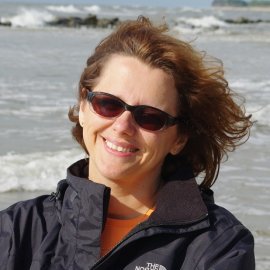
dr hab . Joanna Matraszek
In 2002 I obtained a PhD in chemistry doing research under the supervision of Prof. Mieczkowski at the University of Warsaw. As a Marie Curie Training fellow, I conducted research in Prof. Duncan Bruce's group at the University of Exeter. Since 2004 I have been working at my alma mater as an adjunct.
My research interests include organic functional materials, in particular liquid crystals. My research activities focus on the development of structures of mesogenic compounds, optimisation of their synthesis paths and characterisation of their physicochemical properties. At the core of my interests are chiral supramolecular structures, in particular those made by achiral molecules. In recent years I have also been working on materials

prof. dr hab. Józef Mieczkowski
Profesor emeritus
2. Assistants
dr Maciej Bagiński
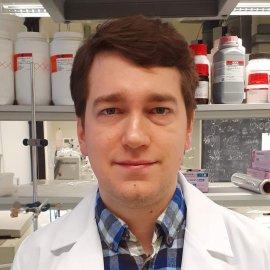
I completed my undergraduate studies at the Faculty of Chemistry, University of Warsaw in 2015 with MSc degree in Organic Chemistry. In the same year I started PhD studies under the supervision of Prof. Wiktor Lewandowski. Over the next six years I focused on obtaining and structural characterization of actively controlled plasmonic nanomaterials based on Au nanoparticles and liquid crystalline compounds. As a part of a PhD studies I completed two abroad research internships: six-months in ColSysChem group (prof. Marek Grzelczak) and two-months in ionanoplasmonics group (prof. Luis Liz-Marzán). During PhD studies I successfully applied for two independent research projects: Preludium and Bekker scholarship. In 2023 I defended (with honors) PhD thesis entitled “Reconfigurable plasmonic nanomaterials based on rod-like and dimeric mesogens”. For four years I have been working on the Faculty of Chemistry University of Warsaw (between 2021-2023 as assistant and since 2023 as assistant professor). My research interests are focused on using organic compounds in nanoparticles self-assembly as well as using nanoparticles in construction of lateral flow assay tests.
mbaginski@chem.uw.edu.pl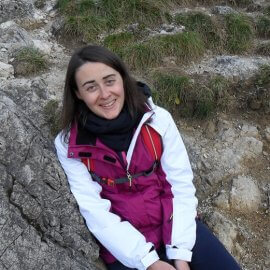
dr Monika Góra
I completed my undergraduate studies at the University of Warsaw in 2010 with MSc degree in Organic Chemistry at the Faculty of Chemistry. In 2011 I started my PhD research under the supervision of Prof. Mieczkowski (University of Warsaw) and Prof. Małgorzata Zagórska (Warsaw University of Technology) within an International PhD Programme „Towards Advanced Functional Materials and Novel Devices – Joint UW and WUT International PhD Programme”. As a part of a doctoral project I spend 6 months at the laboratory of Carla Minarini, Enea, Portici, Italy. I also went on several short research trips to the laboratory of Prof. Guy Louarn, Nantes, France, Prof. Mieczysław Łapkowski Group at Silesian University of Technology and the Department of Molecular Physics, Łódź University of Technology. After graduation I worked three months in Prof. Bolesław Kozankiewicz Group at the Institute of Physics, PAS as a synthetic chemist. Since April, 2016 I have been working on the Faculty of Chemistry, University of Warsaw. My research interests are organic semiconductors, their characterization using different techniques (i. a. UV-Vis spectroscopy, cyclic voltammetry, photoluminescence) and their application in organic electronics (OLEDs, OFETs, OPVCs). In addition do scientific research I have classess with students (i.a. The Synthesis of The Biomolecules and Methods of Organic Compounds Identifiation B). I was the supervisor of two Bachelor’s Thesis and one Msc Thesis.
mgora@chem.uw.edu.pl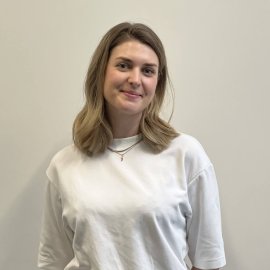
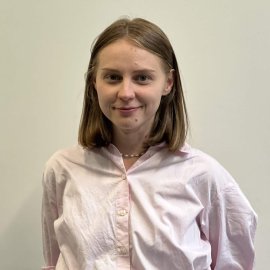
Natalia Kowalska
M.Sc.
I hold a bachelor's degree in Nanostructure Engineering from the Faculty of Physics, University of Warsaw, and a master's degree in Chemistry from the Faculty of Chemistry, University of Warsaw. In 2020, I began my PhD studies at the Faculty of Chemistry, University of Warsaw. During my academic journey, I completed an internship with Prof. Marek Grzelczak's group at the Centro de Física de Materiales (San Sebastian, Spain), where I ained valuable experience in the synthesis of anisotropic gold nanoparticles. My current research interests include optimizing the synthesis of anisotropic and chiral gold nanoparticles, tailoring their organic shells, and applying them in ELISA diagnostic tests and chiral bioassays for mRNA detection.
3. PhD Candidates
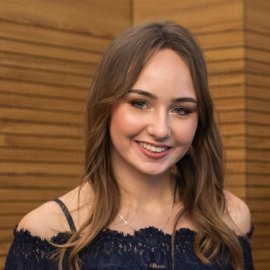

Filip Bandalewicz
M.Sc.
I graduated with a Bachelor's degree in Nanoengineering from the Faculty of Physics at the University of Warsaw in 2021. In 2023, I completed my Master's in Physical Chemistry at the Faculty of Chemistry, also at the University of Warsaw, with both dissertations supervised by Prof. Wiktor Lewandowski. That same year, I began my PhD studies at the Doctoral School of Exact and Natural Sciences at the University of Warsaw. During the early stages of my PhD, I participated in several international research stays, including at the Yamamoto-Imaoka group at the Tokyo Institute of Technology, and in laboratories such as Prof. Matthias Karg's group in Düsseldorf, Germany, and the Diamond Light Source in Oxford, UK. My graduate research focused on the synthesis of gold nanoparticles with chiral morphology, with publications covering topics such as non-polar solvent compatibility, liquid crystal nanocomposites, and synthetic chiral induction compounds. Currently, my research is centered on three areas: 1) self-assembly of chiral nanoparticles using surface polymerization, SiO₂ condensation, and liquid crystals, 2) synthesis of chiral gold nanoparticles, and 3) photothermal therapy and lateral flow assays (LFA). In addition to my research, I use Blender software to create 3D models for figures in our publications and to design and 3D-print custom apparatus for experimental use.